
“Keep moving because it is the journey, not the destinations, that count.”
My earliest memory is about sea and rocks. When I was four years old, a family friend and my mother drove to Peggy’s Cove, Nova Scotia. I sat in the back seat while my mother complained about her life alone and the difficulty of looking after me.
At the time, my father went away for six or seven months at a time on a hydrographic ship in Hudson’s Bay, specifically to the area around Chesterfield Inlet. He brought back Eskimo stone carvings and sealskin coats.
Now I live in a place called Brentwood Bay, a one street village and streets of settler families alongside four Indigenous reservations. A ferry takes cars and walkers across to Mill Bay and then on the highway up to North Vancouver Island.
It comes naturally to me to live on an island because I was born on one. I arrived on this planet in a small place called Ventnor on the Isle of Wight, U.K. I have been back twice, once to swim in the surf and enjoy the semitropical environment.
Also, for about ten years my deceased husband and I divided our time between Calgary, Alberta, and Pender Island in the southern Gulf Islands. We owned two houses there and also a sloop, in which we cruised inland waters.
My family life included my house in Chester, N.S. where I met some of what locals called “the Chester scribblers” and I published an interview with a famous diarist and diplomat, Charles Ritchie.
My personal beliefs include pacificism and conflict resolution, neither of which is functioning well in the globe today.
For many years, I taught courses in women's studies. Overall, I have shaped my life and my writing around two women writers, Virginia Woolf and Edith Wharton.
People watching is one of my favourite pursuits. Since I trained as a newspaper reporter, as well as completing three university degrees, I notice things, especially as I travel by float plane, buses, subways, boats, and planes. I am saddened my the fact that we pay little attention to children, much downward study of phones, and judge people by what they buy and consume. For me, that would be an obsession with books and bibliotherapy, which is learning how to solve problems through reading.
Dr. Alex Pett brings a literary life to the page through teaching, fiction, memoir, research, and reflective practice. Her writing work moves between creative expression, academic inquiry, and the lived discipline of keeping words close to daily life. From life-writing workshops to publications and presentations, hers is a career shaped by reading, writing, art, and attention.
Alex Pett’s painting begins in colour, memory, dreams, and the pull of hidden images. Her work moves between abstraction and representation, shaped by reefs, art, energy centres, island landscapes, Baja, caves, sea, sand, and mystery. Rather than starting with a fixed image, she paints into discovery, allowing repeated subjects and lived experience to surface through the process.
Alex Pett’s teaching grows from a long career in English, communications, writing, literature, and liberal arts education. She has taught in universities and colleges across Canada. Her focus is writing, critical thinking, life writing, business communication, and creative practice. Her work joins scholarship, classroom leadership, curriculum development, and personal mentorship for students and writers who want to bring their writing to life.
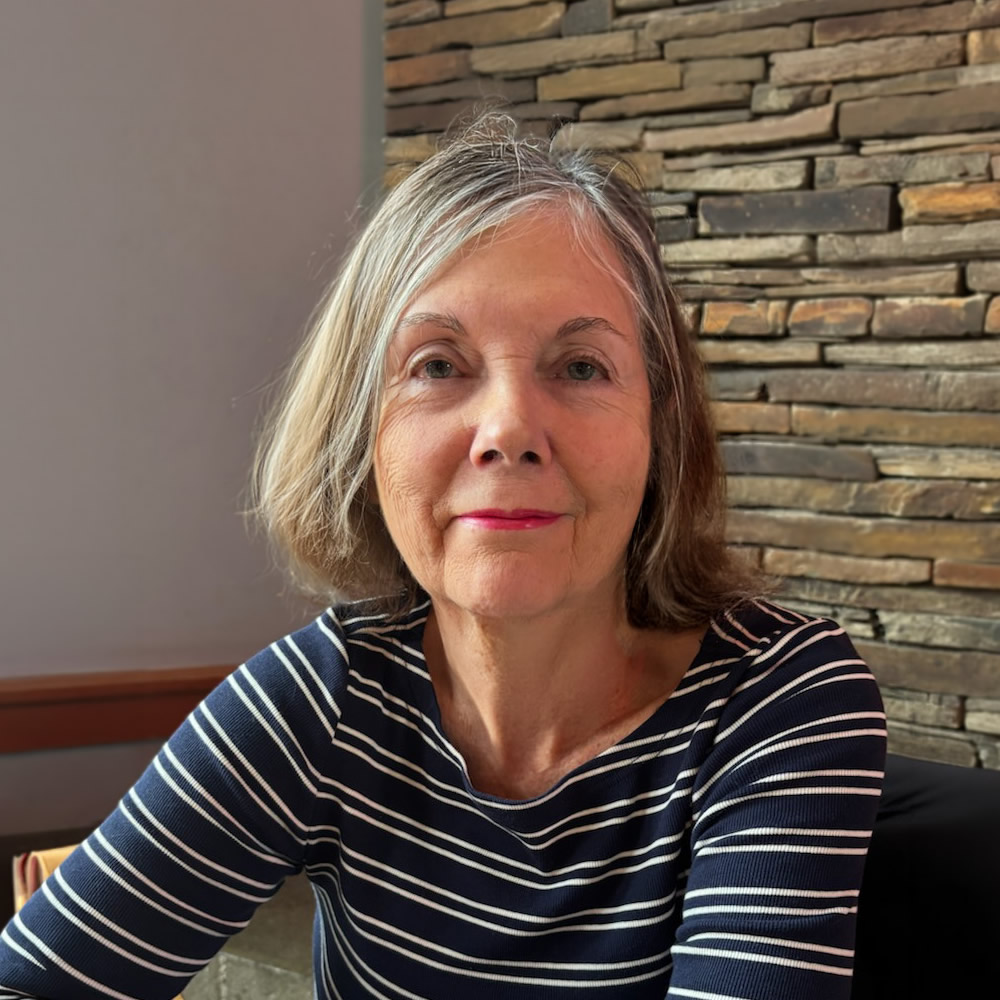
Dr. Alex Pett has taught English and communications in Canadian universities and colleges from coast to coast. She lives on Vancouver Island and commutes to Vancouver for face to face teaching and professional activities. Her interests are painting, researching, reading, writing, beach walking, and hiking.
See the list of below of what she could do for you:
